Showing posts with label performance. Show all posts

Tuesday, 20 January 2015

Glute Activation: Reduce risk of injury and increase performance

Hello again. This article follows on from previous articles on foam rolling and mobility, flexibility and stability. These three areas have been discussed as part of a pre-training routine, in order to reduce risk of injury and enhance performance.

This article will look at what glute activation is, how it can be achieved and why should it be considered as part of your pre training routine.

What is glute activation?
Your glutes are a powerful muscle group, made up of the gluteus maximus, gluteus minimus and gluteus medius.  These muscles play an integral role in your performance, as they are heavily involved in powerful movement such as sprinting, jumping or change of direction.

If these muscles are weak or inactivate (gluteal amnesia), other muscles are forced to compensate, leading to an increased risk of injury and decrement in performance levels. Therefore it is important to strengthen these muscles and ensure they are ‘active’ ahead of exercise.

How can this be achieved?
There are a number of stretches and exercises we can do in order to activate our glutes.

Pre-activating muscles with near maximal exercises / lifts have previously proved effective, through enhancing neural drive. A disadvantage of this is that muscles are exposed to a risk of fatigue and you must have access to gym equipment.

By activating muscles using body weight exercises, your routine can be done anywhere and anytime, with no equipment required.  For example this can be done on the pitch before a game, as a part of your pre match warm up. Mini bands can be used to add an external resistance to the body. These bands are not too hard to find and won’t break the bank either.

Here are a few examples. Try to ensure all exercises are performed in a controlled manner.


Glute Bridges (double / single leg)


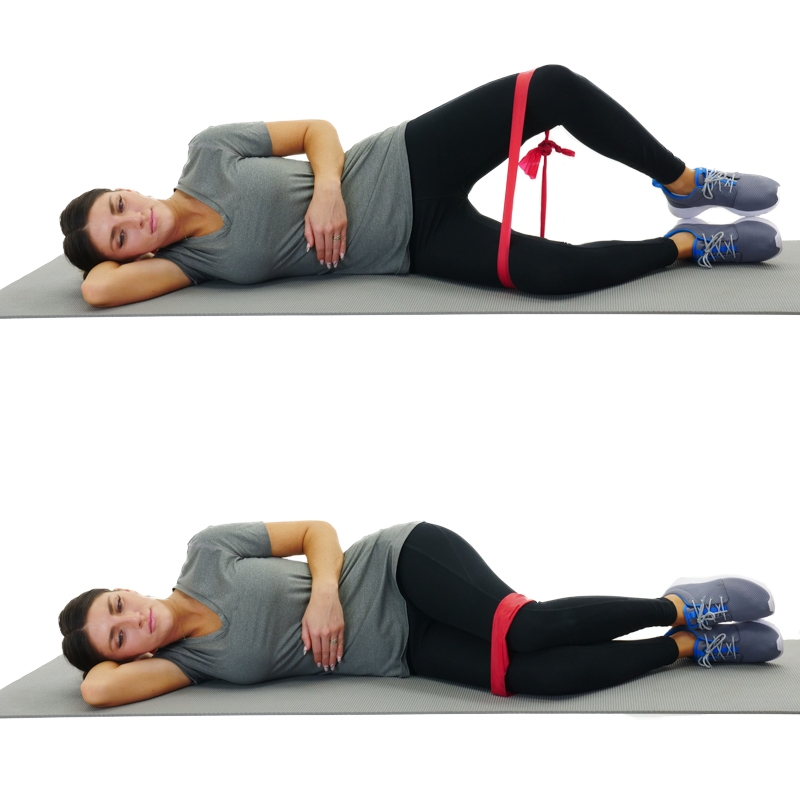
Clams


Hip Abductions


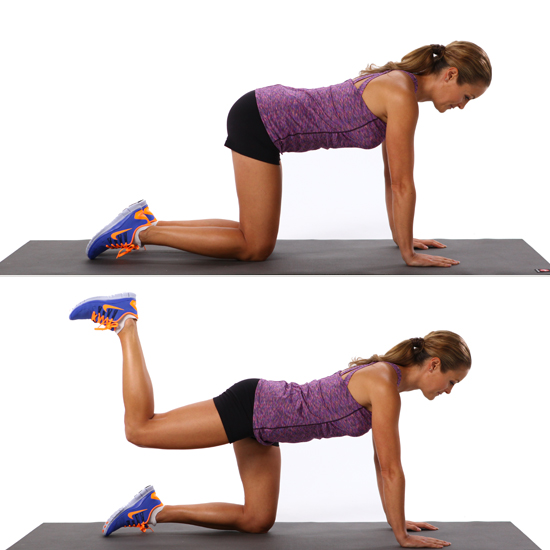
‘Fire Hydrant’


‘Donkey Kick’


Side Steps


Monster Walk


What does the research say?

A study by Crow et al. (2012), examined the effect a low load warm up, to activate the gluteal muscles, had on performance with a group of Australian rugby players.

Seven exercises were used in the warm up to target the gluteus, including some of the exercises listed above; glute bridges, clams and hip abductions.

Results of the study showed that this warm up significantly increased lower body peak power and improved jump height scores in a weighted (20kg bar) squat jump test.

These results highlight that a warm up incorporating gluteal activation exercises has the ability to increase performance levels significantly.

So why not give it a go your self?

If you would like any tips on the exercises listed above or any other details regarding glute activation, as always, I am more than willing to help.

Thank you again for taking the time to read this article! Goodbye for now.

Reference

Crow, J., Buttifant, D., Kearny, S. and Hrysomallis, C. (2012). Low Load Exercises Targeting the Gluteal Muscle Group Acutely Enhance Explosive Power Output in Elite Athletes. Journal of Strength and Conditioning Research, 26(2), pp.438-442.

Active recovery - What it is, and how it can be used?


Welcome one and all to part 4 of The Recovery Series on the Macro Man Fitness Blog.

In the past few weeks we have covered compression clothing, ice baths, and most recently massage.
In this article I’m going to talk a little bit about active recovery, what it is, and how it can be used to help aid recovery.

Active recovery is a fairly simple concept – it is enabling your body to recover from hard exercise by doing some mild exercise. One of the most common for this is swimming, but also cycling and walking.

The basic idea is that you are doing some form of exercise that allows you to raise your heart rate, and increase blood flow. So just going for a very slow and lethargic walk won’t really cut it.
By increasing heart rate and blood flow it can help to flush away waste products from the muscles such as blood lactate1.


A large amount of the research uses cycling as the selected exercise choice, and recommends working between 30% of your lactate threshold2 or 30-40% VO2 Max3,4,5. But for the regular trainer, this means absolutely nothing and can be a bit of a pain to find out. So – how else can we judge how hard to work?

Without being research driven, as it is completely different from person to person, it is recommended at a level where you are breathing heavier than normal but would still be able to hold a conversation. This shows an increased breathing rate, and therefore blood flow as you begin to breathe faster to supply greater oxygen for the increased pulse rate.

So if you decided to go out and cycle to recover, it would be a cruising speed, not just turning the pedals over to stop you from falling, but also not fast enough to be physically challenging on your muscles or aerobic system.
If you went out for a walk, it would be somewhere between the slow stroll home after leg day at the gym, but not as fast as the hypnotic hip movement of speed walkers at the Olympic Games. A walk with a hyperactive dog would probably be about the right level.

Now earlier on I mentioned swimming, and I haven’t really got back to it yet.
Next week we’ll talk about …
Just kidding. Swimming can be great when used as a recovery tool, because it is a form of exercise that can allow you to either be partially or fully submerged in water, so using either the lower body or whole body to propel yourself, it raises heart rate, and it is non-loaded.
What do I mean by this? If you’ve ever swum you’ll know the feeling of weightlessness in the pool. This is because the water takes the weight of your body, so there is no pressure going through your joints in activities such as aqua jogging, unlike if you were road jogging where your knees can take a beating.


I am not saying that you’re not working when swimming, because if you were to stop moving completely you’d drown. So don’t do that. Not wise. But swimming is definitely a good way to recover between high intensity exercise bouts6.

So there you have it, some info on active recovery. So now your options include, wearing leggings, jumping in some cold water, getting a massage, using a foam roller, or doing some more exercise to help you recover.

Next week is the grand finale of this series, and it will be looking at what I believe to be the two biggest factors in getting adequate recovery – sleep and nutrition.

So head back to the Macro Man Blog regularly, see what the other awesome authors are writing about, and check out the latest installment from yours truly. And of course – share it around. You can also subscribe as a FREE premium subscriber and get our blog posts delivered straight to your email address!

Thanks for reading,

Rob Nitman. BSc. ASCC.

References:

1.     Martin, N.A. et al (1998). The Comparative Effects of Sports Massage, Active Recovery, and Rest in Promoting Blood Lactate Clearance After Supramaximal Leg Exercise. Journal of Athletic Training, 33(1).
2.     Spencer, M. et al (2006). Metabolism and Performance in Repeated Cycle Sprints: Active versus Passive Recovery. Medicine and Science in Sports and Exercise, 38(8).
3.     Fairchild, T.J. et al (2003). Glyocgen Synthesis in Muscle Fibers During Active Recovery From Intense Exericse. Medicine and Science in Sports and Exercise, 35(4).
4.     Gupta, S. et al (1996). Comparative Study of Lactate Removal in Short Term Massage of Extremities, Active Recovery and a Passive Recovery Period After Supramaximal Exercise Sessions. International Journal of Sports Medicine, 17(2).
5.     Bond, V. et al (1991). Effects of active and passive recovery on lactate removal and subsequent isokinetic muscle function. The Journal of Sports Medicine and Physical Fitness, 31(3).

6.     Lum, D., Landers, G. & Peeling, P. (2010). Effects of a Recovery Swim on Subsequent Running Performance. International Journal of Sports Medicine, 31(1).

Sunday, 14 December 2014

Basic Principles of Sports Nutrition to follow

When preparing to train and compete in a sport, athletes need to build a foundation from which they can develop and progress. In my opinion diet and nutrition should provide a consistent underlying fundamental from which all the training and performing. Assessing your diet from its present state until where it is where you want it to be is a process, a journey.
When taking on an assessment of your nutritional intake, in terms of the demands of your sport, you should always consider a few fundamental notions to follow to help you progress:


1.    Saturated fats and salt levels should be avoided or kept to a minimum wherever possible
2.    Seasoning can be a great way to enhance the flavour of foods without resorting to high sugar sauces – things like herbs, spices (chilli can be a great addition to spend up the metabolism, due to its capsicum content) and black pepper– use as much as you wish to enhance taste
3.    Be careful of low fat substitutes – although they may provide a low fat alternative to your choice, it may be counteracted by high levels of sugar or additives as a result, so always check and use with caution
4.    Consider GI when consuming carbohydrates – try to predominantly use low GI carbs as sources of fuel from carbohydrates, wholegrain and whole wheat are best. These give you a more gradual release of energy at a more consistent level
5.    Proteins in their original form should be eaten regularly - Each meal to contain some bio-available protein in low fat form – e.g. chicken breast, turkey breast, and very lean beef, and include oily fish as a choice at least twice a week.
6.    Fats have benefits – especially during the recovery process, unprocessed fats sourced from both animals and vegetables will be beneficial to your recovery. Try food sources such as salmon, mackerel and herring alongside vegetables such as avocado will benefit you immensely. Cooking your food using coconut oil will only boost these benefits further, and provide natural aids that cooking with normal oil cannot provide
7.    Deep fried foods should be a no-go area – using different variations of cooking to keep things fresh and remove tedium. Techniques include dry roasting, baking steaming and grilling
8.    Salads and vegetables with at least two meals of the day.
9.    Still mineral should be served with all meals
10. Keep it simple - Good simple foods with plenty of taste/flavour works best - there is no need for adding lots of extras just for an extravagant presentation or serving of food.

11. Plan ahead – this should go alongside the above point, in order to maximise the benefits you can reap.

The right choices in the kitchen make your choices in the gym worthwhile!

This article was expertly written by Morgan Price-King BSc.

What's Popular Now