Showing posts with label strength and conditioning. Show all posts

Tuesday, 20 January 2015

Glute Activation: Reduce risk of injury and increase performance

Hello again. This article follows on from previous articles on foam rolling and mobility, flexibility and stability. These three areas have been discussed as part of a pre-training routine, in order to reduce risk of injury and enhance performance.

This article will look at what glute activation is, how it can be achieved and why should it be considered as part of your pre training routine.

What is glute activation?
Your glutes are a powerful muscle group, made up of the gluteus maximus, gluteus minimus and gluteus medius.  These muscles play an integral role in your performance, as they are heavily involved in powerful movement such as sprinting, jumping or change of direction.

If these muscles are weak or inactivate (gluteal amnesia), other muscles are forced to compensate, leading to an increased risk of injury and decrement in performance levels. Therefore it is important to strengthen these muscles and ensure they are ‘active’ ahead of exercise.

How can this be achieved?
There are a number of stretches and exercises we can do in order to activate our glutes.

Pre-activating muscles with near maximal exercises / lifts have previously proved effective, through enhancing neural drive. A disadvantage of this is that muscles are exposed to a risk of fatigue and you must have access to gym equipment.

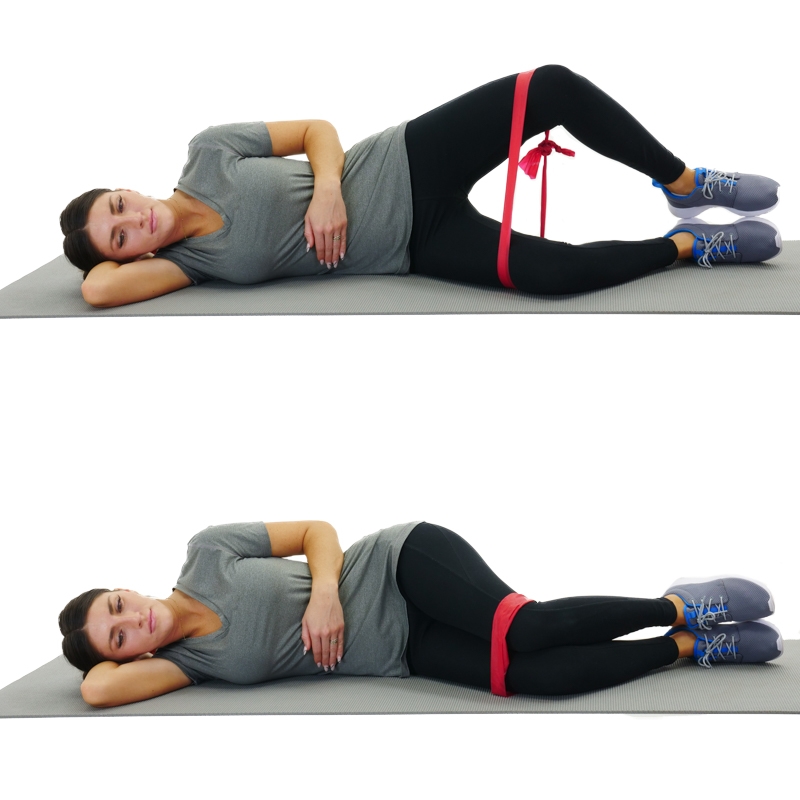
By activating muscles using body weight exercises, your routine can be done anywhere and anytime, with no equipment required.  For example this can be done on the pitch before a game, as a part of your pre match warm up. Mini bands can be used to add an external resistance to the body. These bands are not too hard to find and won’t break the bank either.

Here are a few examples. Try to ensure all exercises are performed in a controlled manner.


Glute Bridges (double / single leg)


Clams


Hip Abductions


‘Fire Hydrant’


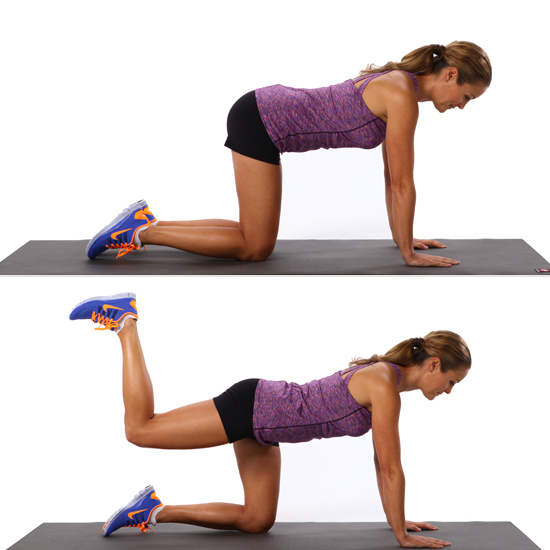
‘Donkey Kick’


Side Steps


Monster Walk


What does the research say?

A study by Crow et al. (2012), examined the effect a low load warm up, to activate the gluteal muscles, had on performance with a group of Australian rugby players.

Seven exercises were used in the warm up to target the gluteus, including some of the exercises listed above; glute bridges, clams and hip abductions.

Results of the study showed that this warm up significantly increased lower body peak power and improved jump height scores in a weighted (20kg bar) squat jump test.

These results highlight that a warm up incorporating gluteal activation exercises has the ability to increase performance levels significantly.

So why not give it a go your self?

If you would like any tips on the exercises listed above or any other details regarding glute activation, as always, I am more than willing to help.

Thank you again for taking the time to read this article! Goodbye for now.

Reference

Crow, J., Buttifant, D., Kearny, S. and Hrysomallis, C. (2012). Low Load Exercises Targeting the Gluteal Muscle Group Acutely Enhance Explosive Power Output in Elite Athletes. Journal of Strength and Conditioning Research, 26(2), pp.438-442.

Active recovery - What it is, and how it can be used?


Welcome one and all to part 4 of The Recovery Series on the Macro Man Fitness Blog.

In the past few weeks we have covered compression clothing, ice baths, and most recently massage.
In this article I’m going to talk a little bit about active recovery, what it is, and how it can be used to help aid recovery.

Active recovery is a fairly simple concept – it is enabling your body to recover from hard exercise by doing some mild exercise. One of the most common for this is swimming, but also cycling and walking.

The basic idea is that you are doing some form of exercise that allows you to raise your heart rate, and increase blood flow. So just going for a very slow and lethargic walk won’t really cut it.
By increasing heart rate and blood flow it can help to flush away waste products from the muscles such as blood lactate1.


A large amount of the research uses cycling as the selected exercise choice, and recommends working between 30% of your lactate threshold2 or 30-40% VO2 Max3,4,5. But for the regular trainer, this means absolutely nothing and can be a bit of a pain to find out. So – how else can we judge how hard to work?

Without being research driven, as it is completely different from person to person, it is recommended at a level where you are breathing heavier than normal but would still be able to hold a conversation. This shows an increased breathing rate, and therefore blood flow as you begin to breathe faster to supply greater oxygen for the increased pulse rate.

So if you decided to go out and cycle to recover, it would be a cruising speed, not just turning the pedals over to stop you from falling, but also not fast enough to be physically challenging on your muscles or aerobic system.
If you went out for a walk, it would be somewhere between the slow stroll home after leg day at the gym, but not as fast as the hypnotic hip movement of speed walkers at the Olympic Games. A walk with a hyperactive dog would probably be about the right level.

Now earlier on I mentioned swimming, and I haven’t really got back to it yet.
Next week we’ll talk about …
Just kidding. Swimming can be great when used as a recovery tool, because it is a form of exercise that can allow you to either be partially or fully submerged in water, so using either the lower body or whole body to propel yourself, it raises heart rate, and it is non-loaded.
What do I mean by this? If you’ve ever swum you’ll know the feeling of weightlessness in the pool. This is because the water takes the weight of your body, so there is no pressure going through your joints in activities such as aqua jogging, unlike if you were road jogging where your knees can take a beating.


I am not saying that you’re not working when swimming, because if you were to stop moving completely you’d drown. So don’t do that. Not wise. But swimming is definitely a good way to recover between high intensity exercise bouts6.

So there you have it, some info on active recovery. So now your options include, wearing leggings, jumping in some cold water, getting a massage, using a foam roller, or doing some more exercise to help you recover.

Next week is the grand finale of this series, and it will be looking at what I believe to be the two biggest factors in getting adequate recovery – sleep and nutrition.

So head back to the Macro Man Blog regularly, see what the other awesome authors are writing about, and check out the latest installment from yours truly. And of course – share it around. You can also subscribe as a FREE premium subscriber and get our blog posts delivered straight to your email address!

Thanks for reading,

Rob Nitman. BSc. ASCC.

References:

1.     Martin, N.A. et al (1998). The Comparative Effects of Sports Massage, Active Recovery, and Rest in Promoting Blood Lactate Clearance After Supramaximal Leg Exercise. Journal of Athletic Training, 33(1).
2.     Spencer, M. et al (2006). Metabolism and Performance in Repeated Cycle Sprints: Active versus Passive Recovery. Medicine and Science in Sports and Exercise, 38(8).
3.     Fairchild, T.J. et al (2003). Glyocgen Synthesis in Muscle Fibers During Active Recovery From Intense Exericse. Medicine and Science in Sports and Exercise, 35(4).
4.     Gupta, S. et al (1996). Comparative Study of Lactate Removal in Short Term Massage of Extremities, Active Recovery and a Passive Recovery Period After Supramaximal Exercise Sessions. International Journal of Sports Medicine, 17(2).
5.     Bond, V. et al (1991). Effects of active and passive recovery on lactate removal and subsequent isokinetic muscle function. The Journal of Sports Medicine and Physical Fitness, 31(3).

6.     Lum, D., Landers, G. & Peeling, P. (2010). Effects of a Recovery Swim on Subsequent Running Performance. International Journal of Sports Medicine, 31(1).

Thursday, 15 January 2015

Massage and Self-Myofascial Release


Welcome back to the recovery series. This is now part 3, and our subjects for discussion are massage and self-myofascial release (SMR).

Now, I imagine most people understand the basic premise of what a massage is and what it consists of. Usually there are two types, a regular massage which is more therapeutic and relaxing using softer contact, and also sports massage which is a more physical experience getting deeper into the muscle to release tension, knots, and bound up tissue caused by exercise or general life1.


This leads to a happy customer either way in most cases (not the kind of happy endings you may be thinking … this is a child friendly article after all) as the tension of muscles can be released leading to greater range of movement, and can also assist stress management2.

SMR is slightly different. A lot of you reading this will have heard of it, and if you haven’t, I’m hoping that you have heard of something called Foam Rolling. They are one and the same in that SMR is what it says – releasing the tension of the fascia by yourself. Broken down this is; self - you, myofascial - the thin layer of fascia that covers the muscle belly, and release – how can I put this … “to free from confinement/to free from anything that constrains3. Yes I did just use a dictionary for that, don’t judge me.
Essentially it is just using a foam roller, or other such tools, to release any areas of tension in the body4.


There are pros and cons to both of these in my opinion. With massage you can get a more thorough treatment on any identified area, but unless you have a friend in the business who can give you a good deal it can often be quite pricey. Especially seeing as the effects are not life long but only short term5.

It can also be a bit less time effective, as depending on your masseuse it could be either 30 or 60 minutes per treatment, plus travel time to and from. Plus there’s one more, you might not know when you’re going to be in need of a massage. So unless you have a regular booking already in place, if something causes you to need one – you may then have to wait for an available slot.

With foam rolling the only expense is the initial purchase of the items. This can be entirely based upon your budget or needs. For me – I use a Trigger Point roller; it’s quite heavy duty and has ridges allowing for a more thorough release. It’s a little more expensive than some, but I’ve had it for almost 3 years and it’s still holding strong. I used to own one of the simple and cheap rollers, but being 115kg+ at the time, I flattened it within a few weeks of regular use. I also use a massage stick to roll my calves and quads, and a lacrosse ball, hockey ball or sometimes even a golf ball (for the real sneaky little knots hiding away) to get at individual knots rather than a whole muscle belly. I’m not saying you need all these, but it’s just what I use.

Apart from that, with foam rolling all you need is the know-how (knowing where is sore and how to roll that area – check out reference 4 & 6 for more info), and some floor space to do it. Time-wise I feel it is more efficient as a little and often approach can alleviate a lot of issues.


What role do these both play on recovery I hear you ask (and even if you’re not asking, I’m going to say anyway); both can be used to alleviate muscle fascia tension, which will allow a greater range of movement. It can also help to reduce the amount of waste product build up in the area, with appropriate technique (generally considered to be towards the heart) helping to flush waste.

You can buy Foam Rollers here at pretty low cost. Much cheaper than paying a sports therapist to give you a massage... (And less painful!!)

Once again, I hope this article was helpful for you. If it was, please give it a share on social media. There are plenty of other good articles to read on the Macro Man blog, so check them out and get anyone you think might be interested to have a look.

The Recovery Series is well under way, with 3 parts now complete. Next week we’ll take a look into active recovery and how it could help you.

Thanks for reading,


References

1.     Cherkin, D.C., Sherman, K.J., Kahn, J. et al. (2011). A comparison of the effects of 2 types of massage and usual care on chronic low back pain: a randomized, controlled trial. Annals of Internal Medicine, 155(1).
2.     Sherman, K.J., Ludman, E.J., Cook, A.J. et al. (2010). Effectiveness of therapeutic massage for generalized anxiety disorder: a randomized controlled trial. Depression and Anxiety, 27(5).
3.     http://dictionary.reference.com/browse/release?s=t
4.     Robertson, M. (2008). Self-Myosfascial Release: Purpose, Methods & Techniques. Robertson Training Systems, Indianapolis, USA.
5.     Furlan, A.D., Imamura, M., Dryden, T. et al. (2008) Massage for low-back pain. Cochrane Database of Systematic Reviews, 4(1).
6.     http://www.lightfield.com/etc/Self_Myofascial_ReleaseMM.pdf - accessed 11/01/2015

Tuesday, 6 January 2015

Mobility, Flexibility and Stability - Why are they important in performance?


Hello again and welcome.  Today’s article will be based around mobility, flexibility and stability. I’m sure these are generic terms you have all heard of before, but this article will look specifically into why we should focus on them when training.

What are they?
Okay, so to start off with, let’s look at how these terms are defined. I always believe it is important to have definitions in the back of your mind when training so we can justify our training methods by keeping a focus on the enhancements we are trying to achieve.


Mobility is the ability to be able to move freely and easily, flexibility is the range of motion possible at a joint or muscle and stability describes how efficiently the body manages forces to remain stable under pressure.


Why should mobility, flexibility and stability be trained?
A short session containing mobility, flexibility and stability exercises before a training session will increase the body’s ability to move freely and easily, increase the range of movement possible and improve the ability to maintain form under external forces. These training adaptions will consequently improve your level of performance and also decrease your risk of injury.

How can these be trained?
Personally, I like to add the session onto the start of my normal training session, incorporating it into my warm up. Along with mobility, flexibility and stability exercises, the session consists of foam rolling and some glute activation. This acts as a pre-training session to prepare the body for exercise to ensure I am reducing my injury risk but also maximizing my levels of performance.

Mobility
In order to allow the body to move freely and easily, we need to loosen off and exercise our joints and muscles through their full range of motion. It is recommended to focus on joints such as your shoulders, back, hips, knees, ankles as well as all major muscle groups.
I start my initial focus on general mobility by going for a short jog, incorporating skipping, arm circles and trunk twists. I then focus on my back by performing various back loosening exercises such as knee rolls or cat-camels then onto my hips with some hip openers and leg swings.
Following on from these exercises, I would then further focus on the lower body by performing a number of functional squat and lunge (forward, backward, lateral) based exercises, promoting that high range of movement in my joints and muscles.

Flexibility
Once warm, and you have been through your mobility exercises, we can now look to increase that current range of movement through some flexibility exercises. There are numerous ways to train flexibility; it may be worth looking into each method and seeing which is best for you. Most commonly used methods as part of a warm up protocol are static and dynamic stretching. When stretching statically, ease the body into a position in which you can feel a slight stretch or discomfort (not pain) and hold for around 30 seconds. Any increase in flexibility this generates will consequently improve your mobility also.

For sports such as football, there is clearly significance on the lower body. Try to focus on your glutes, hamstrings, groin, quadriceps, hip flexors and calves.

Stability
Similarly to mobility and flexibility, the actual exercises you select are dependent on your sport. For example, if your sport is tennis, you may focus more on the stability of your shoulders but there are several areas of the body that require stability work. As I am a footballer myself, for the purpose of this article we will focus on ankle stability.

In sports such as football, it is often required to make sharp lateral movements from a single leg stance. Consequently there is a load being placed on the ankle which, if not managed correctly, can lead to injury. If the ankle is strong and stable enough to manage these loads correctly, we can cut away quicker, sharper and more powerfully (away from opposition). Another advantage of ‘stronger ankles’ is improved balance. Strengthening the muscles surrounding the ankle will enhance our balance when performing on a single leg.

Some example exercises include hop and sticks (forward, back, lateral, 180 degree turn), single leg balances (even or uneven surface; un-weighted or weighted) and single leg medicine ball throw and catches to add a force to resist against, forcing your ankle to work and developing balance.

What does the research say?

Now lets look at what the research has had to say regarding mobility, flexibility and stability. All references can be found below in case you would like to look further into any studies or read up further on any theory.  

So, is it really worth it?

Joyce and Lewington (2014) write that mobility exercises should focus on joint range of motion and tissue length. Athletes should perform a series of these mobility movements to access full range of motion, stabilise the joint and create clean movement within the body, preparing them for maximum performance.

A study by Johnson et al. (2014) investigated hamstring flexibility, measuring knee extension range of motion, after a six week programme of stretching. Results showed that participants were successful in increasing their joint range of motion after the programme, which supports the hypothesis behind flexibility training.

A study looking into ankle sprains by Thacker et al. (2003), concluded that special emphasis should be placed on ankle strengthening, particularly with use of a balance board or similar.  It was suggested such methods are likely to lead to a reduction in injury risk and improvement in performance

Joyce and Lewington (2014) also state that unstable surfaces are a potent tool for stimulating muscle stabilisers and incorporating this stability / balance training into a warm up can enhance proprioceptive input.  This also reduces the risk of lower back or leg injuries (Bird and Stuart, 2012).

So why not find the time to incorporate this into your training programme and see if it works for you?

As always, We’d love to hear what you think!


References

Bird, S. and Stuart, W. (2012). Integrating Balance and Postural Stability Exercises into the Functional Warm-up for Youth Athletes. Strength and Conditioning Journal, 34(3), pp.73-79.

Johnson, A., Mitchell, U., Meek, K. and Feland, J. (2014). Hamstring flexibility increases the same with 3 or 9 repetitions of stretching held for a total time of 90 s. Physical Therapy in Sport, 15(2), pp.101-105.

Joyce, D. and Lewindon, D. (2014). High-performance training for sports. Human Kinetics


Thacker, S., Stroup, D., Branche, C., Gilchrist, J. and Goodman, R. (2003). Prevention of ankle sprains in sports: An Update. International Sports Medicine Journal, 4(4).

What's Popular Now