Showing posts with label health tips. Show all posts

Saturday, 29 November 2014

5 Tips for Better Sleep and a Healthier Mind and Body

Here's my not-so-dirty secret: I sleep about ten hours a night. You may say, "Well, I don't need that much sleep." You may say, "I can't get that much sleep." But do you know how much sleep you really need?

What are you doing to make sleep a priority in your life? While scientists may not fully understand the role sleep plays in our life cycle, or even understand why we need to sleep at all, they agree on one thing: healthy sleep patterns are essential to physical and mental health. Interrupted, irregular, or insufficient sleep is a critical factor in illnesses of both the body and mind.

 sleep, sleep habits, sleep deprivation, getting better sleep, how to get sleep 

How Much Sleep Do You Need

The Mayo Clinic and the National Sleep Foundation agree adults need at least seven to eight hours of sleep a night.1,2 Sleep needs are individual, though, and your body chemistry, hormones, age, and activity level will affect how much sleep you need. You also need more sleep when you are sick or under personal, emotional, or other physical stressors. As a result, your sleep need may be the minimum seven hours or it may be as high as twelve when you are very ill.

I personally find I need close to ten hours in the winter and about 8.5 come summer. People often poke fun at me for my bedtime habits. I climb under the covers around eight o'clock most nights. But, I'm never sorry come the next morning when I wake regularly without an alarm clock around six o’clock, feeling ready for the day.

5 Tips for Better Sleep

1. Exercise daily but not too close to bedtime.

As a reader of this site, you are likely aware of the profound benefits of exercise, including regulation of metabolic hormones, stimulation of digestion, and promotion of circulation. All of these things can lead to better sleep.

But during a workout, stress hormones including cortisol, prolactin, growth hormone, and testosterone rise in the body. Cortisol in particular is disruptive to restful sleep. Give your body ample time to reduce these chemicals prior to lying down for the night. If you choose to exercise after six o'clock, choose options like yoga or walking that will give you the benefits of exercise while not increasing stress hormones.

2. Choose a light dinner.

In yoga and Ayurveda, it is common practice to eat the largest meal at midday when digestion is the most active. Evening meals often consist of a light serving of easily digestible, cooked vegetables. When I am away at a yoga retreat and eating this way, I sleep like a baby.

3. Stay away from alcohol.

I know this is not popular advice, but drinking alcohol affects sleep cycles. It may cause you to fall asleep quickly, but the sleep will not likely be truly restful and may include many bouts of insomnia later in the night. High sugar levels in most alcoholic beverages also negatively affect sleep patterns.

 sleep, sleep habits, sleep deprivation, getting better sleep, how to get sleep 

4. Create a bedtime routine.

Go to bed at the same time every night, even on the weekends, and do the same things each night before bed. Turn off all light-emitting electronics about an hour before your bedtime. Start your routine then, perhaps taking a bath, reading, or enjoying another quiet activity like sipping bedtime tea. When it is time for sleep, stop doing everything else.

Use your bed for sleeping only, creating an environment of peace and quiet. If you think you do not have time to get eight hours of sleep, this is the time of day you should focus on. Many of us spend several hours a night watching TV, when we could be sleeping. Sleep is the most important habit you will ever form, so make the effort to create the habit well.

5. Wake up around the same time each morning.

It drives my husband nuts, but I do not sleep in more than thirty minutes on the weekend. Truth told, it's not possible for me to do so. My sleep pattern is so regular that I wake up on time whether or not I have anywhere to be. Thankfully for me, I enjoy my morning time. I willfully surrender nighttime TV and Internet surfing so I can get up early, walk the dog, and enjoy meditation. My morning routine is just as firm as my nighttime routine, meaning I rarely ever have conflict in my sleep patterns.

Depending on your personal routine and sleep habits, some of these suggestions may seem like radical changes. If you try making sleep a priority for just one month, though, you will feel healthier, stronger and - icing on the cake - younger. Good sleep is a secret to vibrant skin, healthy hair, and a sharp mind. Good sleep is also a first step in dealing with any mental illness or healing any physical ailment.

References:
1. "How many hours of sleep are enough for good health?" MayoClinic.org.
2. "How Much Sleep Do We Really Need?" National Sleep Foundation.
3. M.J. Gawel, et al., "Exercise and hormonal secretion," Postgraduate Medical Journal Jun 1979;55(644):373-6

Monday, 24 November 2014

Tips to Stay Fit Over the Holidays


It's that time of year: The clock has turned back, Halloween is over, stores are preparing for the holidays and our diets go by the wayside.

Farewell, bikinis and salads. Hello, big sweaters and comfort food. All those yummy holiday meals will invariably add a few pounds that we'll struggle to lose when the New Year starts.
How about finally putting an end to the seasonal cycle? Staying on track during winter means establishing healthy habits that will be with you throughout the year--habits you will celebrate as the sunny days return and you are ready to shed the sweaters.
Maridav/iStock/Getty Images

Here are my top five tips to stay in shape throughout the holiday season:

1. Don't stop exercising.
Shorter days, frosty temperatures, bad weather: Excuses are easier to find at this time of year. As a result we burn less calories than we take in, and the first pounds soon settle in.
The solution: Keep up your usual activity levels and, if need be, create a schedule to keep you from procrastinating. Opt for more indoor activities and reconsider what time of day you exercise.

2. Allow yourself one indulgence meal per week.This might be the season of holiday dinners and office parties, but by overindulging on all of those occasions you run the risk of packing on the pounds fast. The trap? Telling yourself that because it's the holidays you might as well relax and enjoy yourself -- and that January will be the time for "starting fresh."
The solution: Plan one pleasure meal a week. But whatever the dish, always have steamed vegetables in place of bread or potatoes. Counterbalance with some "light" days, with all-fruit breakfasts and enough exercise to sweat off the excesses of the table.

3. Eat winter fruits and vegetables.Flu, tonsillitis, coughs and sniffles and other bugs: This is also the time of the year our immune system is under the most strain. If you're not eating enough vegetables and fruits, you're probably not getting enough vitamins and antioxidants. As a result, you end up fighting one winter illness after another and have little energy to move, let alone exercise.
The solution: Load up on seasonal fruit and vegetables. Gorge on colorful root-vegetable salads and steamed or stir-fried veggies. The choices might not seem as broad as in the summer, but there is plenty out there you might not have explored. Don't hesitate to try something new.

4. Start with a soup.Every winter the same thing happens: You get home from work or school cold, hungry and desperate for something hearty and warming.
The solution: Begin every meal with a homemade seasonal vegetable soup. Brimming with vitamins, minerals and fiber, it will fill you up before you tackle the rest of your meal. Prepare a big batch and freeze the extra so you'll have a stash ready to eat in minutes.

5. Stay motivated.How do you keep up the motivation when it's cold and dark outside? Staying active and getting outdoors -- even for a short while, preferably at the brightest time of the day -- is by far the easiest solution to break the pattern of sluggishness. Did you know that no amount of indoor lighting can compete with the sun for boosting our energy levels? Even dull winter sun filtered through a thick layer of clouds is significantly more powerful than artificial lighting.
The solution: Make yourself accountable. Find a buddy and make a date to get outside. Nothing beats mutual support to remain motivated.
--Valerie

This post was expertly written by Valerie Orsoni. Connect with Valerie on her website, Facebook and Twitter.

Sunday, 16 November 2014

4 Ways Excess Fat Makes You A Ticking Time Bomb

Fat, or adipose, tissue was traditionally known as a passive source of stored energy. However, fat is now known to also be a very active endocrine organ, able to produce hormones that play a significant role in the body and have an impact on overall health. While this function is normal within individuals with a healthy body fat percentage, the function of fat cells as an endocrine organ becomes altered with high body fat levels, contributing to the development of metabolic syndrome, insulin resistance, and type 2 diabetes. It is very important to understand the risk factors associated with excessively high body fat percentage.

1. Fat Gain Signals Inflammatory Response

body fat, body fat percentage, bmi, adipose tissue, dangers of body fatAdipose tissue is composed of white fat cells, which contain a large lipid droplet surrounded by cytoplasm with the nucleus on the periphery. When excessive fat is gained, these fat cells increase to four times their original size before dividing into new cells. Fat gain also alters the normal secretion of certain molecules throughout the body. While the exact mechanism is unclear, studies suggest that excessive adipose tissue can initiate an acute inflammatory response.6 Bone-marrow derived immune cells respond by infiltrating adipose tissue, and releasing certain molecules that can induce changes in fat cell activity and lead to chronic inflammation.6 This immune and fat cell activity cause downstream effects that can significantly affect your health when excessive adipose tissue exists in your body. Some of these effects are explained in further detail below.

2. Fat Cells Release Inflammatory Factors

Tumor Necrosis Factor α (TNF-α) is an inflammatory molecule released from adipose tissue. Overweight and obese individuals secrete TNF-α in greater amounts, contributing to insulin resistance.3 TNF- α down regulates GLUT-4, which is responsible for transporting glucose into skeletal muscle, resulting in reduced insulin function. TNF- α also reduces the activity of the insulin receptor, diminishing insulin’s metabolic effects and potentially leading to muscle insulin resistance.5

Interleukin-6 is another molecule released in greater amounts from excessive adipose tissue. Like TNF-α, IL-6 also down regulates GLUT-4, further reducing insulin function and contributing to insulin resistance. Increased IL-6 concentrations also induce the liver to release excess amounts of C-reactive protein (CRP) and fibrinogen in the blood, which are two of the major risk factors for cardiovascular disease and type 2 diabetes.6 IL-6 also increases the concentration and activity of blood platelets, which increases the risk for blood clots.2 The activity of cells that line the blood vessels, such as endothelial cells and smooth muscle cells, is also affected by high IL-6 levels, contributing to vascular wall inflammation and damage.4

3. Fat Cells Cause Plaque Formation

Fat stores also affect your health by reducing the fat cell’s secretion of the anti-atherogenic, anti-inflammatory protein, plaque build up, plaque formation, adiponectin, excess body fatadiponectin. This protein’s main function is to inhibit the buildup of adhesion molecules along blood vessel walls that lead to plaque formation. Adiponectin concentrations decrease as adipose tissue accumulates, placing you at greater risk for plaque formation, cardiovascular disease, and insulin resistance.3  Researchers believe TNF-α may be one of the contributing factors to the decrease in adiponectin concentrations.6

4. Fat Cells Can Become "Sick"

To further illustrate the dangers of accumulating excessive fat stores, a study by Bodenet al. (2008) in the Diabetes journal suggests fat cells from obese individuals are “sick,” due to significantly higher levels of stress to the cell. The authors explain that a constant influx of excess calories into fat cells can induce stress to the endoplasmic reticulum (ER), which is responsible for synthesizing lipids for storage. This stress triggers ER stress sensors, which activate various pathways in the body to alleviate stress. Researchers believe that this ER stress may be a contributor to the inflammation and insulin resistance associated with diabetes.           

In conclusion, adipose tissue does much more than only serve as an energy source. Fat cells are very active, able to communicate with immune cells and initiate an inflammatory response with excess calorie storage. Both fat and immune cells secrete various inflammatory factors that negatively influence normal and healthy functions of the body. As these responses become chronic with significant fat gain, you are at greater risk for chronic inflammation, cardiovascular disease, insulin resistance, and diabetes. Therefore, no matter how active you are, it is important to keep your body fat percentage at a reasonable level in order to maintain long-term health.

References:
1. Boden, G. et al., Increase in Endoplasmic Reticulum Stress-Related Proteins and Genes in Adipose Tissue of Obese, Insulin-Resistant Individuals.  Diabetes, 2008. 57: p. 2438-2444.
2. Burstein, S.A. et al., Cytokine-induced alteration of platelet and hemostatic function. Stem Cells, 1996. 14: p. 154-162.
3. Diamond, A.S. et al,The Endocrine Function of Adipose Tissue. GGH, 2002. 18(2): p. 17-23.
4. Wassmann, S. et al., Interleukin-6 induces oxidative stress and endothelial dysfunction by overexpression of the angiotensin II type 1 receptor.Circ Res, 2004. 94: p. 534-541.
5. Weisberg S.P. et al., Obesity is associated with macrophage accumulation in adipose tissue. J Clin Invest, 2003. 112: p. 1796-1808.
6. Wisse, B.E., The Inflammatory Syndrome: The Role of Adipose Tissue Cytokines in Metabolic Disorders Linked to Obesity.J Am Soc Nephrol, 2004. 15: p. 2792-2800.

Monday, 3 November 2014

3 Reasons Sleep Benefits Your Heart


Winston Churchill, Napoleon, Albert Einstein and Thomas Edison were all known to enjoy naps throughout the day. They likely knew what many of us so easily overlook: sleep improves alertness, mood and performance.
Yet only two-thirds of Americans get enough sleep to feel their best, according to a poll by the National Sleep Foundation. (Global data on sleep is not as easy to find, but I am confident people in other countries have similar issues to the U.S.) This sleep deficit is partially because sleep can seem like the easiest thing to sacrifice in our busy lives. Yet sleep can have a big impact on not only how you feel but also how your body functions. Getting plenty of shuteye has a profound impact on overall health—especially the heart. Here are three reasons why:

 1. Sleep activates the body’s repair mechanisms

Sleep is a time of restoration and repair. While you sleep, your body works to heal and repair your heart and blood vessels. Getting the recommended eight hours of sleep nightly gives your body the precious repair time it needs.

 2. Sleep allows your heart to “rest”

While your heart beats 24 hours a day, seven days a week, sleep is the time it slows down and “rests.” Heart rate declines during sleep, producing a natural drop in blood pressure. Lower blood pressure means your heart doesn’t have to work as hard to pump blood throughout the 100,000 miles of blood vessels in your body.

 3. Sleep improves oxygenation

Sleep promotes oxygenation—a process that increases oxygen in all of the body’s systems—at a deep level. Your heart is responsible for circulating blood to all of the organs, tissues and cells. Since oxygen is necessary to keeping the heart—and entire body—well, this improved oxygenation is key in supporting heart health.

Sleep is just as important as eating a balanced diet and exercising. While every person is unique in how much sleep they need, a good general guideline is to get eight hours of quality sleep each and every night.

Do you get enough sleep each night? What helps you sleep better?


3 Tips for a Heart-Healthy School Lunch (That Your Kids Will Actually Eat)


Now that kids are likely getting about a third of their nutrition from school—whether from the vending machine or cafeteria—your child’s nutrition should be the most important item on your to-do list.
Consider this: Studies show that nutrition not only impacts behavior and focus, but a healthy diet full of nutrient rich foods may even impact your child’s IQ. Not only that, but a nutritious diet as early as infancy can help support heart health when your child is much older.
Here are three tips for a heart-healthy school lunch:

1. Start with a nutritious, filling breakfast

No, breakfast isn’t technically part of your child’s school lunch. But great nutrition starts with the first meal of the day. One study found that “relative to its energy contribution, breakfast provides a higher percentage of micronutrients than other meals consumed during the day.” Basically, breakfast has the potential to be the healthiest meal of the day.
A healthy breakfast also kick-starts your child’s metabolism, keeps him from getting hungry during the first part of the school day—which will hopefully lead to healthier lunch choices and less unhealthy snacking—and provides a nutritional foundation for learning. The same study found that eating breakfast can even improve academic performance and psychosocial functioning. Breakfast can influence how your child socializes and the behaviors and thoughts he has throughout the day.
What are great options for breakfast? Homemade oatmeal, avocado on whole-grain toast, steamed eggs and whole fruit, or even a nutritious breakfast smoothie or shake. (Add a half or whole cup of oats to this for a healthy start to your child’s day.)

2. Swap in nutrition

Kids aren’t known for adventurous eating. Luckily, there are some easy substitutions you can make to add nutrition to your child’s packed lunch. Here are some ideas:
  • Remake the sandwich: For PB&J, use 100 percent whole grain bread, whole fruit spread (without added sugar—check the label), and a nut butter like almond, walnut or cashew (there should only be one ingredient: the nut).
  • Pack pasta: Whole wheat pasta with pesto and veggies makes for a nutritious dinner—and an easy leftover lunch.
  • Choose sides: Instead of chips or crackers, pack strawberries, grapes or apple slices (not whole apples since kids are less likely to eat them). Carrots and hummus also make for a healthy, delicious and easy-to-pack side. (Hummus is also inexpensive and easy to make. Try this delicious .)
  • Include a nutritious drink. I recommend that all children carry a water bottle throughout the school day to stay hydrated. But if your child doesn’t, pack a bottle of water or a small carton of milk.
  • Don’t completely forgo treats. Kids can enjoy treats just like adults do, but don’t overdo it. If you want to send a cookie in your kid’s lunch once a week, that’s fine. But just send one.

3. Stay consistent

If your child is used to the processed, high-fat and high-sugar options at the lunch cafeteria, she may resist her new healthy packed lunch. Be patient. Try to involve her in picking healthy food at the grocery store and preparing her lunch the night before. As she stops eating the less-healthy food, her palate will adjust to this new menu. In the end, consistency will pay off.
In order to give your child the best chance at a successful future, give him great nutrition. It starts with you—and benefits your child for the rest of his life.
What tips can you add for packing a healthy school lunch?

Sources:
“Are dietary patterns in childhood associated with IQ at 8 years of age?” A population-based cohort study. K. Northstone et al. Journal of Epidemiology and Community Health, Feb 7. 2011. http://www.nal.usda.gov/fnic/pubs/learning.pdf
“Breakfast: A missed opportunity.” S Affenito. Journal of the American Dietetic Association, 107(4): 565 – 569. 2007. http://www.nal.usda.gov/fnic/pubs/learning.pdf


Why Being Active May Help Your Child Succeed in School


This month, I welcome Dr. Luigi Gratton, vice president, worldwide product marketing at Herbalife. He also works with the Center for Human Nutrition at UCLA, the university I taught at for nearly 30 years. Dr. Gratton and I have the opportunity to interact often, and I’ve come to respect him as both a medical expert and friend. I’m pleased to say he’ll be contributing regularly to the Heart Health Initiative, writing about health and nutrition, and bringing insights from his background as both a triathlete and medical doctor. Welcome, Dr. Gratton!
Most kids have been back to school for a few weeks now. Reading, writing and math have replaced pools and picnics, and one question lingers in the minds of parents around the world: How can I help my child succeed academically?
The answer is more than just studying hard. Research shows that physical activity may be a contributor to whether or not kids succeed in academics.
One study found that academic lessons that included physical activity—such as accompanying a lesson with a song that involves jumping, spinning and hand motions—has a positive impact on both body mass index and academic achievement. And a review of 50 studies  showed that there may be a positive correlation between physical activity and academic performance.
What is causing this improvement? Among many other benefits like improved energy levels and focus, physical activity promotes Nitric Oxide (NO) production. NO is a molecule best known for supporting heart health, and it also supports healthy brain function.
These findings mean one thing: It’s a good idea to get your kid moving. Here are four ideas for helping encourage movement:

1. Have your child bike or walk to school

If you live within a mile from school, consider replacing the car or bus with wheels or feet. Join your young child in the commute, or, assuming your area is safe, allow your older child to bike or walk with a friend. Join him on the first few trips to and from school to make sure he knows how to get around safely. Not only will your child get more activity during the day, but you’ll also be encouraging lifelong habits for healthy living.

2. Encourage activity at home

While you don’t have a lot of control over what happens in the classroom or during recess, you can work movement into your home life. After school, encourage your child to spend time being active. It doesn’t matter whether you enroll her in soccer or simply let him play with neighbor kids in the cul-de-sac—the point is to get moving. Any type of physical activity supports NO production and healthy brain function.

3. Stand more

As your child does homework, encourage him/her to stand. This can be done easily at a high kitchen counter or using a standing desk. Standing more during the day supports healthy blood flow, energy levels and brain function.

4. Limit screen time

Kids are tired at the end of a long school day, but that doesn’t mean they need to sit in front of the television or computer. Research from the Iowa State University showed that limited screen time has its benefits: kids get more sleep, do better in school, behave better and experience a number of other benefits. When your kids get home, keep them moving: enlist help with dinner, encourage outdoor play or enjoy a healthy snack—while standing—to discuss the day. After dinner, spend time together during a family walk.
With help and encouragement, your child can support heart and brain health, simply by moving more. The next step? Better nutrition.

3 Heart-Healthy Ways to Reduce Stress


Around 60 percent of Americans have made it a goal to reduce stress. Those are encouraging statistics. Not only is stress emotionally challenging, but high stress levels can have an impact on the heart by impacting blood pressure and cholesterol levels.
That’s why it’s important to be intentional about finding ways to reduce stress levels. But that’s easier said than done, right? We live in a fast-paced society—and even if you’re not in work-obsessed America, chances are you have other stressors: relationships, family responsibilities, finances or health concerns.
If you’re looking to reduce your stress levels, here are three ways to do so:

1. Breathe deeply

Stress causes breathing to naturally become shallower and quicker. Even if you can’t remove whatever is making you feel stressed, simply breathing deeply can benefit the heart and entire body. Research has shown that what’s known as “pranayamic breathing”—manipulating breath movement—can result in heart health benefits: decreased oxygen consumption, decreased heart rate and decreased blood pressure.
I recommend breathing in through the nose, taking in as much air as you can, and then breathing out through the mouth, expelling as much air as possible. Do this for 10 minutes a day, if you can, but even 10 breaths can help.

2. Get outside

Living in an urban environment like I do makes it difficult to spend time in nature. But research published in Environmental Health and Preventive Medicine (EHPM) shows why it’s so important. The study was conducted in 24 forests across Japan, and research participants spent time “forest bathing,” or taking in the atmosphere of the forest. The researchers found that forest bathing promoted lower cortisol levels (the hormone related to stress), pulse rates and blood pressure levels, among other positive health effects.
Any time outside is beneficial, even if you don’t have a forest nearby. I enjoy walking my dogs in the morning—getting fresh air, seeing the trees and greenery, and just getting moving. Cycling is another way I spend ample time outside, and I get to enjoy views of the ocean, palm trees and other beautiful scenery outside. Just being outside helps me feel less stressed, and any amount of stress reduction supports heart health.

3. Move your body

Exercise is so central to my life that it’s hard to remember how I felt before I worked movement into my schedule. But I do know that I just feel better—and a lot of that likely has to do with exercise helping reduce my stress levels.
Exercise increases “feel-good” hormones called endorphins and can boost mood and reduce anxiety. Being active also gets you away from the things that are stressing you out—and, for some people, provides time to mentally work through problems. Plus, exercise increases overall health and heart function, two things anyone can benefit from.
You can’t control what happens in life, but you can control how you deal with it. Reducing stress levels can help make difficult situations easier to handle. And by keeping your stress levels in check, you’ll benefit your heart and body—and feel better in the process.

Thursday, 30 October 2014

Don't Count Calories to Lose Weight: The Body Fat Set Point Theory

We have all been told that 3,500 calories equals a pound of fat. This idea is taught widely in schools and published in many nutrition textbooks. We know if we follow this rule, then we can lose a total of one pound per week by cutting approximately 500 calories per day. We take this as a fact and apply without ever questioning it.
 

The Research on Calories and Fat

But can anyone reading this article tell me where this research came from? I could not, so I took to PubMed. I searched for “3500 calories equals one pound of fat” and got a message telling me, “No items found.” I narrowed my search to “3500 calories and fat” and received six results, none of which were related to the research in determining this magic number.
 
 
So, why do we keep promoting unsuccessful weight loss ideals that are not even backed up by science? Most of us will use calorie counters found on the Internet to help us establish our daily caloric needs. The most popular equation is the Harris Benedict equation. This equation was established in 1918 after looking at extremely small control groups of 136 men, 103 women, and 94 newborn infants. This research is almost one hundred years old. 
 
Really? Science hasn’t made any new discoveries since then to alter this equation and help us fight the obesity epidemic?
 

The Body Fat Set Point Theory

Fortunately, there is good research out there to help us. But for some unknown reason it’s not as well known as the whole 3,500-calories-equals-a-pound-of-fat thing. What we need to look to instead is the body fat set point theory. This theory explains that we have a group of hormones that regulates appetite and body fat storage. These hormones communicate with one another and need to be in balance in order for us to achieve and maintain a healthy weight.


"All of these hormones must be doing their jobs and working in sync in order for us to achieve an optimal weight."

The important hormones are leptin, insulin, glucagon, ghrelin, and adrenaline:
 
  • Leptin was discovered in 1992 and has been found to control how much body fat we store, as well as when we are satiated. 
  • Insulin is our main fat storage hormone. 
  • Glucagon is the opposite of insulin. It stimulates the liver to release stored glycogen and works with adrenaline to free up our stored fats to use as energy. 
  • Ghrelin tells us when we are hungry. 
 
All of these hormones must be doing their jobs and working in sync in order for us to achieve an optimal weight. Other important factors include other peptides and even certain brain regions. 
 

Leptin, Ghrelin, and Insulin

Leptin may just be the ringleader of this circus, though. Leptin is primarily secreted by our fat cells, and when levels are high, then our hunger is decreased. Ghrelin was discovered almost a decade after leptin and it controls our short-term hunger response. Ghrelin is released from the stomach lining, and when levels are high, we increase our hunger response. Both of these hormones are found to be in dysregulation during obesity.
 
 
calories, obesity, fat, fat loss, body fat, hormones, leptin, glucagon, ghrelin
 
Insulin has been a big focus of obesity research for quite some time. It is one reason why some people swear low-carbohydrate diets are the way to go. Insulin has a direct effect on leptin. As insulin levels rise, so do leptin levels. In fact, leptin receptors have been found on the beta cells of the pancreas, where insulin is produced. The problem is we can develop resistance to these hormones and this can cause a number of issues for us. 


Developing Resistance to the Hunger Hormones

When we develop resistance to these hunger-controlling hormones, it is like our body is making a phone call, but we’re not picking up on the other end. As a result, our body needs to yell louder. It does this by releasing more and more of the hormones in question. 
 
Let’s look at this scenario in terms of letpin. If we develop leptin resistance, it means more fat being stored and more food being eaten. Due to the relationship with insulin, if we have leptin resistance, then we have insulin resistance, too.
 
So, we get ourselves into this mess and then decide we need to get our weight in check. We count out our calories and subtract 500 calories per day, just as we have been taught. But in response to this low-calorie eating our body causes our leptin levels to fall. This, again, will increase our eating and fat storage. 
 

"Due to the relationship with insulin, if we have leptin resistance, then we have insulin resistance, too."

On top of that, calorie counting does not take into effect how certain foods react with these hormones. We are told to approach everything in moderation, including our eating, but does this strategy work? Highly palatable foods have been shown to blunt both leptin and ghrelin. This is why it is easy to overeat foods such as ice cream and pizza. This can cause you to take in more calories than you even realize.


What We Can Do to Lose Weight

So what can we do to lose weight if low-calorie eating does not work? We can eat a diet high in nutrient-rich fruits, vegetables, and quality protein, such as grass-fed meat, fish, and eggs. Making sure that protein makes up at least 30% of your daily calories can decrease caloric intake and may increase systemic leptin sensitivity. 
 
I recommend nine to twelve servings of fruits and vegetables per day. If you are attempting to lose weight, then limit your fruits to one to three servings per day. Vegetables are high in nutrients and low in calories. They are almost impossible to overeat. Just be careful how much added sugar, salt, and fat there is in your diet, as these increase the palatability of foods and can lead to overeating.

Friday, 5 September 2014

Personal Training 101: How you get energy; how you use it


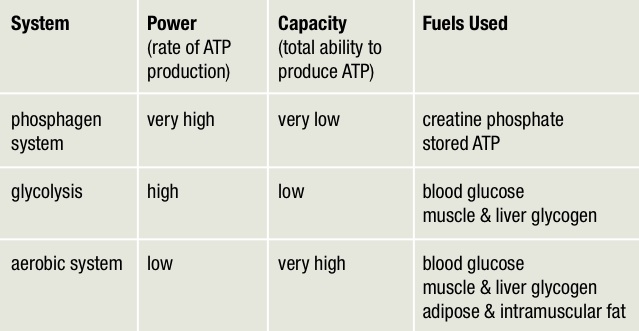
We usually talk of energy in general terms, as in “I don’t have a lot of energy today” or “You can feel the energy in the room.” But what really is energy? Where do we get the energy to move? How do we use it? How do we get more of it? Ultimately, what controls our movements? The three metabolic energy pathways are the phosphagen system, glycolysis and the aerobic system.How do they work, and what is their effect?
Albert Einstein, in his infinite wisdom, discovered that the total energy of an object is equal to the mass of the object multiplied by the square of the speed of light. His formula for atomic energy, E = mc2, has become the most recognized mathematical formula in the world. According to his equation, any change in the energy of an object causes a change in the mass of that object. The change in energy can come in many forms, including mechanical, thermal, electromagnetic, chemical, electrical or nuclear. Energy is all around us. The lights in your home, a microwave, a telephone, the sun; all transmit energy. Even though the solar energy that heats the earth is quite different from the energy used to run up a hill, energy, as the first law of thermodynamics tells us, can be neither created nor destroyed. It is simply changed from one form to another.
ATP Resynthesis
The energy for all physical activity comes from the conversion of high-energy phosphates (adenosinetriphosphate—ATP) to lower-energy phosphates (adenosine diphosphate—ADP; adenosine monophos- phate—AMP; and inorganic phosphate, Pi). During this breakdown (hydrolysis) of ATP, which is a water-requiring process, a proton, energy and heat are produced: ATP + H2O —© ADP + Pi + H+ + energy + heat. Since our muscles don’t store much ATP, we must constantly resynthesize it. The hydrolysis and resynthesis of ATP is thus a circular process—ATP is hydrolyzed into ADP and Pi, and then ADP and Picombine to resynthesize ATP. Alternatively, two ADP molecules can combine to produce ATP and AMP: ADP + ADP —© ATP + AMP.
Like many other animals, humans produce ATP through three metabolic pathways that consist of many enzyme-catalyzed chemical reactions: the phosphagen system, glycolysis and the aerobic system. Which pathway your clients use for the primary production of ATP depends on how quickly they need it and how much of it they need. Lifting heavy weights, for instance, requires energy much more quickly than jogging on the treadmill, necessitating the reliance on different energy systems. However, the production of ATP is never achieved by the exclusive use of one energy system, but rather by the coordinated response of all energy systems contributing to different degrees.
1. Phosphagen System
During short-term, intense activities, a large amount of power needs to be produced by the muscles, creating a high demand for ATP. The phosphagen system (also called the ATP-CP system) is the quickest way to resynthesize ATP (Robergs & Roberts 1997). Creatine phosphate (CP), which is stored in skeletal muscles, donates a phosphate to ADP to produce ATP: ADP + CP —© ATP + C. No carbohydrate or fat is used in this process; the regeneration of ATP comes solely from stored CP. Since this process does not need oxygen to resynthesize ATP, it is anaerobic, or oxygen-independent. As the fastest way to resynthesize ATP, the phosphagen system is the predominant energy system used for all-out exercise lasting up to about 10 seconds. However, since there is a limited amount of stored CP and ATP in skeletal muscles, fatigue occurs rapidly.
2. Glycolysis
Glycolysis is the predominant energy system used for all-out exercise lasting from 30 seconds to about 2 minutes and is the second-fastest way to resynthesize ATP. During glycolysis, carbohydrate—in the form of either blood glucose (sugar) or muscle glycogen (the stored form of glucose)—is broken down through a series of chemical reactions to form pyruvate (glycogen is first broken down into glucose through a process called glycogenolysis). For every molecule of glucose broken down to pyruvate through glycolysis, two molecules of usable ATP are produced (Brooks et al. 2000). Thus, very little energy is produced through this pathway, but the trade-off is that you get the energy quickly. Once pyruvate is formed, it has two fates: conversion to lactate or conversion to a metabolic intermediary molecule called acetyl coenzyme A (acetyl-CoA), which enters the mitochondria for oxidation and the production of more ATP (Robergs & Roberts 1997). Conversion to lactate occurs when the demand for oxygen is greater than the supply (i.e., during anaerobic exercise). Conversely, when there is enough oxygen available to meet the muscles’ needs (i.e., during aerobic exercise), pyruvate (via acetyl-CoA) enters the mitochondria and goes through aerobic metabolism.
When oxygen is not supplied fast enough to meet the muscles’ needs (anaerobic glycolysis), there is an increase in hydrogen ions (which causes the muscle pH to decrease; a condition called acidosis) and other metabolites (ADP, Pi and potassium ions). Acidosis and the accumulation of these other metabolites cause a number of problems inside the muscles, including inhibition of specific enzymes involved in metabolism and muscle contraction, inhibition of the release of calcium (the trigger for muscle contraction) from its storage site in muscles, and interference with the muscles’ electrical charges (Enoka & Stuart 1992; Glaister 2005; McLester 1997). As a result of these changes, muscles lose their ability to contract effectively, and muscle force production and exercise intensity ultimately decrease.
3. Aerobic System
Since humans evolved for aerobic activities (Hochachka, Gunga & Kirsch 1998; Hochachka & Monge 2000), it’s not surprising that the aerobic system, which is dependent on oxygen, is the most complex of the three energy systems. The metabolic reactions that take place in the presence of oxygen are responsible for most of the cellular energy produced by the body. However, aerobic metabolism is the slowest way to resynthesize ATP. Oxygen, as the patriarch of metabolism, knows that it is worth the wait, as it controls the fate of endurance and is the sustenance of life. “I’m oxygen,” it says to the muscle, with more than a hint of superiority. “I can give you a lot of ATP, but you will have to wait for it.”
The aerobic system—which includes the Krebs cycle (also called the citric acid cycle or TCA cycle) and the electron transport chain—uses blood glucose, glycogen and fat as fuels to resynthesize ATP in the mitochondria of muscle cells (see the sidebar “Energy System Characteristics”). Given its location, the aerobic system is also called mitochondrial respiration. When using carbohydrate, glucose and glycogen are first metabolized through glycolysis, with the resulting pyruvate used to form acetyl-CoA, which enters the Krebs cycle. The electrons produced in the Krebs cycle are then transported through the electron transport chain, where ATP and water are produced (a process called oxidative phosphorylation) (Robergs & Roberts 1997). Complete oxidation of glucose via glycolysis, the Krebs cycle and the electron transport chain produces 36 molecules of ATP for every molecule of glucose broken down (Robergs & Roberts 1997). Thus, the aerobic system produces 18 times more ATP than does anaerobic glycolysis from each glucose molecule.
Fat, which is stored as triglyceride in adipose tissue underneath the skin and within skeletal muscles (calledintramuscular triglyceride), is the other major fuel for the aerobic system, and is the largest store of energy in the body. When using fat, triglycerides are first broken down into free fatty acids and glycerol (a process called lipolysis). The free fatty acids, which are composed of a long chain of carbon atoms, are transported to the muscle mitochondria, where the carbon atoms are used to produce acetyl-CoA (a process called beta-oxidation).
Following acetyl-CoA formation, fat metabolism is identical to carbohydrate metabolism, with acetyl-CoA entering the Krebs cycle and the electrons being transported to the electron transport chain to form ATP and water. The oxidation of free fatty acids yields many more ATP molecules than the oxidation of glucose or glycogen. For example, the oxidation of the fatty acid palmitate produces 129 molecules of ATP (Brooks et al. 2000). No wonder clients can sustain an aerobic activity longer than an anaerobic one!
Understanding how energy is produced for physical activity is important when it comes to programming exercise at the proper intensity and duration for your clients. So the next time your clients get done with a workout and think, “I have a lot of energy,” you’ll know exactly where they got it.
For the latest research, statistics, sample classes, and more, "Like" IDEA on Facebook here.
SIDEBAR: Energy System Characteristics
SIDEBAR: Energy System Workouts
Have clients warm up and cool down before and after each workout.
Phosphagen System
An effective workout for this system is short, very fast sprints on the treadmill or bike lasting 5–15 seconds with 3–5 minutes of rest between each. The long rest periods allow for complete replenishment of creatine phosphate in the muscles so it can be reused for the next interval.
  • 2 sets of 8 x 5 seconds at close to top speed with 3:00 passive rest and 5:00 rest between sets
  • 5 x 10 seconds at close to top speed with 3:00–4:00 passive rest
Glycolysis
This system can be trained using fast intervals lasting 30 seconds to 2 minutes with an active-recovery period twice as long as the work period (1:2 work-to-rest ratio).
  • 8–10 x 30 seconds fast with 1:00 active recovery
  • 4 x 1:30 fast with 3:00 active recovery
Aerobic System
While the phosphagen system and glycolysis are best trained with intervals, because those metabolic systems are emphasized only during high-intensity activities, the aerobic system can be trained with both continuous exercise and intervals.
  • 60 minutes at 70%–75% maximum heart rate
  • 15- to 20-minute tempo workout at lactate threshold intensity (about 80%–85% maximum heart rate)
  • 5 x 3:00 at 95%–100% maximum heart rate with 3:00 active recovery

Sunday, 29 June 2014

Underactive Thyroid (Hypothyroidism)

Thyroid function is intimately connected with your metabolism — thyroid hormones basically regulate calorie consumption. But a healthy thyroid also depends on the proper functioning of other body mechanisms, including your neurotransmitters, your reproductive hormones and your adrenal glands.

The thyroid and weight gain

Because patients with an underactive thyroid tend to have a very low basal metabolic rate, one of the most noticeable symptoms of hypothyroidism is weight gain and difficulty losing extra weight. (Sometimes an overactive thyroid can mimic an underactive thyroid by causing weight gain, although this is less common). A minority of women with hypothyroidism don’t gain weight. The difference arises from their individual biochemistry, the quality of the calories they consume, and how they use those calories.
 
Often the “metabolic burn” continues to fall as calories are reduced when dieting. That’s why some women with low thyroid can have weight gain even when they severely restrict calories. In order to fix your metabolism, you have to understand your entire health picture, not just your thyroid.

The thyroid in women

More women than men suffer from hypothyroidism, and many more women than men with thyroid issues have problems with weight gain. Most thyroid problems occur within the gland itself and often don’t reveal themselves until a broader pattern of hormonal imbalance develops. That’s why thyroid issues, menopause and weight gain often appear together.
Why do women experience low thyroid and weight gain with such frequency? The reasons are manifold, but primarily:
  • Women spend much of their lives dieting, usually in a yo-yo cycle of feasting and then fasting. This undermines your metabolism and decreases your metabolic rate, a compounding factor for the thyroid, especially during perimenopause.
  • Women tend to internalize stress, which affects their adrenal, brain, and thyroid function, resulting in increased cravings for sweets and simple carbs to provide instant energy and feel good hormones.
  • Women experience monthly hormonal fluctuations that affect their biochemistry.

What you can do about hypothyroidism and weight gain

The first thing to do if you are experiencing stubborn weight gain is to talk to your practitioner. She or he may ask for a thyroid test or measure TSH (thyroid stimulating hormone). I have found in my practice that many women who test within the “normal” range of traditional medical standards still need thyroid support. Their TSH may be only slightly elevated, but enough so that it influences their metabolism and causes weight gain.
For these women, supplemental nutrients such as selenium and a regular meal plan that balances a proper ratio of protein to carbohydrates increases their metabolic functioning and they begin to lose weight. In some cases, a low-dose thyroid replacement hormone is also needed.
There is a lot of controversy in the endocrinology world regarding hypothyroidism treatment. There are those that believe that patients who test within the normal range but have very low basal metabolic rates and very low basal temperatures need thyroid supplementation. There are others that argue that only patients with significant abnormalities should be supported with thyroid hormones.
 

You CAN lose weight with an under active Thyroid, but:

  • You may not lose weight at the same rate you did before.
  • You may not lose weight at the same rate as someone else.
  • You may not get back to the size you were.
Be realistic about your goals and objectives and realize that being a certain weight or size is not always the best goal when living with hypothyroidism. Having more energy and reducing feelings of fatigue and depression are usually more important to your quality of life.
We have an all natural supplement called Thyax that can help you deal with your under active thyroid. Click here for more information on our product.
 

When you are setting your goals, keep these things in mind:

  • Make lifestyle changes. Hypothyroidism will be with you for the rest of your life, so healthy eating, exercising and taking care of yourself must be priorities.
  • Make time for healthy eating and regular exercise. Commit to prepare food, exercise and take care of you. Put yourself on your to-do list each day.
  • Be optimistic and acknowledge the positive changes you have made–no matter how small. Journal about the highs and lows of the journey as an outlet for frustration and as a way to look back at your progress when the going gets tough.
  • Change doesn’t happen overnight. It takes small steps to get from where you are to where you want to be. Stays focused and take it slow. Do the best you can. Take a step further each day, pick yourself up when you stumble, and keep your eyes on the goal.
  • Few worthwhile outcomes are easy or quick. Be wary of the latest fad in weight loss or ploys for people with hypothyroidism.

Dietary Tips for weight loss with Hypothyroidism

  • Reduce your use of stimulants. When trying to fight fatigue, stimulants like caffeine may be a way of life. Hypothyroidism makes the adrenal glands susceptible to overwork and burnout. The adrenal glands can only take so much stimulation before they begin to under-function. Weaning off of stimulants, including coffee, soda and tea, can help the adrenal system heal and recharge.
  • Decrease the amount of carbohydrates you eat. Research shows that individuals with a low thyroid are more successful when eating slightly less–about 45-50% of total calories coming from carbs. Limiting your intake to the low end (about 50% carbs) will help you accomplish this. At 50% carbs, your diet will probably result in about 30% protein and 20% fat.
  • Choose more complex carbs. Enjoy plenty of fresh fruits, vegetables, and whole grains (whole wheat bread and pasta, brown rice, wheat germ). These foods are nutritionally superior to their refined counterparts.
  • Limit sugary (simple carbohydrate) foods such as pies, cakes, cookies, candy, soda, ice cream and chips. These foods stimulate high insulin production.
  • Avoid eating carbohydrates by themselves for meals or snacks. Be sure to include a protein source at the same time. Protein is digested more slowly, helping slow down the release of insulin.
  • Increase your fibre intake to 30-40 grams per day. People with hypothyroidism often experience sluggish digestion and constipation. A high-fibre diet can help move things along so to speak, while increasing satiety so that you never feel hungry. Be sure to slowly increase your fibre over time. To meet this goal, you may also need a fibre supplement such as Metamucil.
  • Drink 8-12 cups of water every day. Metabolism requires water, so not drinking enough will hurt your weight loss potential as well. When increasing your fibre intake 30-40 grams, water is even more important. Drink additional water to compensate for perspiration from exercise and hot weather.

Exercise & Other Considerations to help with weight loss

Hypothyroidism does cause weight gain–typically 10-20 pounds. Gaining more than 20 pounds can usually be attributed to fatigue that limits your activity, not to the disorder itself. When you feel fatigued, you don’t feel like exercising. This can lead to a vicious cycle since not exercising can result in greater fatigue and so on and so on. Physical activity and exercise are keys to weight control and to decreasing the affects of fatigue.
  • Get regular aerobic (cardio) exercise. Individuals with a low thyroid can have low levels of serotonin, the brain chemical involved in appetite control, depression, and sleep regulation. Just thirty minutes of aerobic (cardio) exercise, five times per week can help boost serotonin levels to decrease these symptoms.
  • Likewise, strength training helps increase metabolism, which is also suppressed in those that are hypothyroid. Although you may not have much energy initially, get moving! The more you move the more you can boost the energy you will have to exercise each day.
  • Reduce the stress in your life. Stress causes many people to make unwise food choices and overeat. Reactions to stress are controlled by the adrenal glands, which are overworked and under active thyroid in patients. Stress also increases cortisol levels, increasing hunger and affecting insulin levels. Reducing stress is an often overlooked factor in weight loss.
  • Practice deep breathing. Many times the increased weight and lack of physical fitness causes those with hypothyroidism to pant for air, taking shallow, short breaths. Deep breathing exercises can help you take in more oxygen and release more carbon dioxide with each breath and can help with weight loss, stress reduction, and relaxation.
Hypothyroidism is a life-long condition. With careful management, people with thyroid disease can live healthy, normal lives. The best way to take control of your thyroid health is to work with your medical provider to develop a treatment plan that includes nutrition, exercise, and stress relief.


This post can be found at Macro Man's Main Blog!


What's Popular Now